Hello, I’m Jane
Like you perhaps, I’ve had an up and down journey through life.
Today I find purpose in a vision to germinate and grow nonviolent interaction between all of us humans and towards our natural world.

-
#gopeaceable – vision of a global grassroots movement

Imagine a day, not too far off, when each encounter you have is met with empathetic understanding. The person who has mistakenly tail-ended your car, the phone company employee, the government official, the person whose view on vaccination differs from your own, each listen with care to what you have to say. What if, for the first time since the decline of collaboration as the social norm 10,000 years ago, we humans have the wherewithal within easy reach to transition to a collaborative, empathetic and peaceable world?
As I see it, the happy arrival of two widely accessible social tools, Social Media and the Nonviolent Communication (NVC) model changes the ballgame. My vision is that these two concepts used together now open the way for a #gopeacable movement to emerge and ‘go viral’, normalising nonviolent interactions between people across the globe. I’m now looking for two co-visionaries to explore this vision further.

If you feel weighed down by the judgemental labels flung across social media, family dinner tables, political forums, and woven into self-talk, that separate us from each other, you are not alone. Indeed, as Johann Hari points out, “It’s no sign of good health to be well adjusted to a sick society.” What I sense is that people are poised, ready for a transformational way to safely negotiate difference and restore community. When the ship is sinking, passengers search for lifebelts.
Normalising nonviolence could avoid the ship of humanity sinking. After all, the hierarchical model of power over others so entrenched in our society is not the only way. I worked alongside the forest dwelling Ba’aka people, hunter gatherers, in Central African Republic. Like Quakers, the Ba’aka social model is based around collaboration not competition, and their is no hierarchical leadership. We in the West could structure things differently too: research shows our one year-olds are naturally collaborative until they are socialised in childhood to see right/wrong thinking and competion as the acceptable norm. So imagine our common future once organisations, government, school, and business, are redesigned for empathy and collaboration to be the expected standard.

A grassroots social movement with groundswell strong enough to open the way for the emergence of empathy as the norm for the 21st century may seem fanciful, yet it’s surely worth exploring. Let’s consider the ‘seeds of war’ in judgemental behaviour, the power of the Nonviolent Communication (NVC) way of life to transform human interactions, and how social media could role model nonviolence into the furthest reaches of the globe.
“When two people relate to each other authentically and humanly, God is the electricity that surges between them.” Martin Buber
Culture wars about ‘who is right’ and ‘who is wrong’ disconnect us from each other, yet judgemental language is currently normalised and accepted in all strata of society. Perhaps you yourself still view others through a lens of ‘who is right’ and ‘who is wrong’?
In contrast, the NVC model provides a tool to create judgement-free interactions. The approach was developed by clinical psychologist, Marshall Rosenberg (1934 – 2015) out of research into the causes of violence, and how to reduce it. Rosenberg was curious why some people remained non-judgemental and open however those around them behaved; while others shifted into blame, judgement, and retribution. He encapsulated his findings into a practical tool. For the first time, the option of a nonviolent response is in easy reach of everyone for each face-to-face, email, group or social media encounter.

It is not always clear that ‘nonviolence’ is not an absence of something. It’s actually an affirmative choice about how to show up in the world: the ‘Ahimsa’ philosophy behind Gandhi’s movement. ‘Non-violent’ people simply avoid violent acts; those practising ‘nonviolence’ choose their behaviour to build peace. That hyphen makes all the difference!
“All that has been integrated into NVC has been known for centuries about consciousness, language, communication skills, and use of power that enable us to maintain a perspective of empathy for ourselves and others, even under trying conditions.” Marshall Rosenberg
Nonviolent communication is a simple process and easy to learn. With an understanding that all humans share the same array of ‘universal basic needs’ and this is what connects us, practitioners learn to reframe dialogue in a non-judgemental way, following a four-step process: Observation – Feeling – Need – Request. With judgement removed, a person finds it straightforward to honour the needs of ‘the other’ as well as their own, needs often hidden deep below the dialogue.
It’s 5 years since a friend explained how there was an alternative way to relate to others called ‘nonviolent communication’. It was news to me: I’d been brought up to believe winning arguments and tolerating judgements that others came out with was simply ‘how the world worked’. Now that I have adopted this alternative approach to life, judgements from others (and self) no longer restrict my spirit, the bouts of depression that used to burden me have gone, and adopting an NVC approach has made interactions with others so much less stressful.
Take what happened to me last week for example. “Jane, you’re disrespectful and uncaring,” my neighbour, with whom I normally get on well, called out. Years ago, I would have reacted with self-justification, grovelling apology, or verbal counterattack, perhaps all three. No longer. At the core of NVC is the understanding that in every action or behaviour, ‘everyone is meeting their needs the best way they can at the time’, and I recognised my neighbour was doing just that, albeit in a clunky way. For unrelated reasons she’d had a difficult week, and my genuine mistake, not noticing where a friend had parked, had triggered her anger. Though her words were set to push us apart, I could look beneath her words, guessing her hidden longing for connection and empathy, and that was what I honoured. The potential ‘seeds of war’ germinated into deeper closeness.
After developing the NVC approach, Rosenberg initiated peace programs in war-torn nations, held workshops in 60 countries, and set up NVC schools. Today hundreds of NVC trainers across the globe teach this nonviolent approach to life, while many other initiatives such as the Alternatives to Violence Project, Restorative Circles, and Alcoholics Anonymous similarly seed peaceable engagement into diverse communities. At the same time within western society, growing numbers seek to transition to lifestyles in flow with the earth and their peers. Eco-philosopher Joanna Macy calls this shift, ‘The Great Turning’.
“While the initial activity might seem to exist only at the fringes, when their time comes, ideas and behaviours become contagious: the more people pass on inspiring perspectives, the more these perspectives catch on. At a certain point the balance tips and we reach critical mass. Viewpoints and practices that were once on the margins become the new mainstream.” Joanna Macy
Nonviolence still hasn’t mainstreamed though, despite these pockets of peaceable engagement. So that’s where social media, often slammed for its destructive effects on community, comes in. Like fungal mycelia that spread unseen through the soil, social media has the capacity to carry a countercultural message of nonviolence into the heart of every community in the world.
I’ve been spending an hour or two each week over the past two years on Facebook and Twitter, experimenting with NVC. I seek to engage with the angriest or most abusive person I can find and the outcomes are heart-warming. The angry, anti-government gun-toting Republican ‘antivaxxer’ turns out to be an anxious father wanting the best for his pre-schooler; the climate change denier is simply prioritising fears about mortgage payments on his family’s home if he lost his job in the oil-industry. For me, there’s still a sense of wonder every time the dialogue opens up as the other person realises there is no judgement, no ‘being right’ or ‘being wrong’.
There’s a challenge with engaging peaceably on social media though – its countercultural, so can feel lonely and rapidly drains my capacity. In a world geared for people to hold power-over positions, at times when support is lacking, it’s easy to feel like retreating to old adversarial ways. Other times, I find myself on the verge of giving up: pushback feels intense when a person swears, aims to diminish my value, or mocks my words. And while for me the words of Marshall Rosenberg hold true, “There’s no information about the person being judged in a judgment,” it’s not something I’d want others to face alone.
I envisage people coming on board #gopeaceable as self-created three-person ‘seedpods’ to ensure no-one attempts NVC without mutual support. If a person has others to mourn with when things don’t go right, and to celebrate with when they do, they are much more likely to continue with the as-yet countercultural NVC approach to life. Apps could support the movement with online NVC training and access to experienced NVC trainers, underpinned with information crowd-sourced, Wikipedia-style.
“Never doubt that a small group of thoughtful committed individuals can change the world. In fact, it’s the only thing that ever has. ” Margaret Mead
As I see it, a #gopeaceable movement with robust support would reclaim social media as a peaceable public space. (Remember when Facebook was just a way to connect with friends?) Encountering someone who has dropped judgement of others inspires curiosity and seems to be catching. Furthermore, social media provides a perfect practice space for learners of NVC because written dialogue leaves time to think. Imagine the culture of nonviolence reverberating throughout virtual spaces until it spills out across the real world.

And that’s where you may come in. Inspired by the famous injunction of Margaret Mead, I’m seeking two others to join me to meet as a ‘#gopeaceable pod’ online for the next 8 weeks to co-vision how a #gopeaceable movement could take root and grow. Are you one of them?
-
It’s not my rubbish but it’s my community!

“We are the protectors,” Max reminds others as he sets off up the wharf with bucket in hand. Once a month a ‘flashmob’ of locals, liveaboard boaties, and visitors find the 90 minutes ‘Earthcare Opua’ gathering is not only rewarding but surprisingly enjoyable!

Earthcare Opua remains deliberately unstructured. With no-one in charge, newcomers and regulars alike simply assemble in assorted hi-vis with bucket or bag and a protective glove. The group searches for litter across Opua, ‘harvesting’ debris from roadsides, tracks and the wharf. “Knowing what I have picked up may keep a seabird or fish safe, means a lot,” explains Janie, “It’s something practical I do once a month that really makes a difference!”
“I can’t believe all the cigarette butts,” a local says. “I must have picked up 100 or more, including a pile outside my mate’s business! Today I’ve found out butts contain plastic and when seagulls feed them to their chicks, it kills them. That’s so crazy! Tomorrow, I’ll be down to chat with my mate! I bet he doesn’t even realise! Maybe it’s his workers, maybe customers, but a sand can for stubs wouldn’t be hard eh?”
Amongst the liveaboards from the marina, a competitive element develops. “Anyone else find more than a dozen cable ties, ‘cut and dropped’? “ A discussion begins around small bits of rubbish washed by yesterday’s under the hard stand fence. “Another rain and they’d have been floating in the ocean!” says one overseas yachtie who sees the practical impact her work has had. ‘it’s good to help out, and, I’ll be more sparing with cable ties from now on!”
An Aucklander has come with his Opua friends. He’s shocked by the number of pie wrappers he’s picked out of marina gardens! Mainly though, he’s pleased his friends persuaded him to come along. “It’s been great to meet all you guys. I love coming up here and now I’ve done my bit to care for the Bay!”
Earthcare Opua meets outside The Opua Store the first Sunday of each month at 9am. All welcome. *Opua Store and the Marina Café kindly support volunteers bringing a reusable cup with a complementary tea or coffee after the pick-up.
Are you unable to make Earthcare Opua next month but want to do your part to protect the Bay?

Opua Business owners – your business no doubt depends on the health of the sea. Is there something more you can do to support your customers and workers to care for our Bay?
Seafarers – how many cable ties do you really need?
Smokers – could an empty Eclipse Mints tin in your pocket/bag/car be your new ‘butt holder’?
Pie lovers –Would you be willing to consider being a role model for protecting the bay?
Householders – Still taking packaging you dislike home with your purchase? Help businesses step up to their responsibility to talk with their suppliers about earth-friendly alternatives by handing packaging back in at the store. #timetoasksupplierstochange
Jane Banfield is a Paihia grandmother with a passion for the ocean. Her first introduction to yachting was to marry the Kiwi yachtsman who 35 years ago happened upon the remote island school in Vanuatu where she was a volunteer teacher. A keen kayaker, sailor and almost-daily swimmer, Jane is a self-styled ‘zero waste granny’ who has chosen a low impact packaging-free lifestyle and supports others in the Bay of Islands to do the same.
-
Single-use Packaging : An email story.

From: Peter’s of Kensington
Sent: Tuesday, 21 January 2020 5:41 pm
To: me
Subject: A reminder to review your products from www.petersofkensington.com.au .A quick reminder for you, Jane Banfield. Thanks again for buying these products from www.petersofkensington.com.au. We would like to remind you that writing a review of these products will help us improve our customer satisfaction. Cristel – Mutine Removable Saucepan w/Glass Lid 18cm/2.1L
23 January 2020
Dear Peters team
I feel very angry. You have sent the 2 saucepans I ordered with such a quantity of plastic packaging that it insults and dishonours the needs of our family, future generations of New Zealanders and our dearly-loved natural world. I have advised others not to buy from you again until you change your processes.
This packaging is totally unnecessary. The saucepans come from France in cardboard cartons and in an individual plastic bag (which you should ask your suppliers to leave out). You could have put a bit of string around the two cartons and sent them like that. But no, each went into a separate oversized carton, which you then filled with quantities of plastic bubble wrap, sealed with plastic tape and then wrapped with plastic parcel strapping. You then sent each giant carton separately so they arrived with different couriers on different days.
I don’t know whether this is the way you want to treat our NZ environment? If not, would you be willing to confirm that you are changing to eco-friendly ways of distributing your goods. I am sure you agree we all need to work together as good stewards to regenerate our environment, not create unnecessary amounts of plastic packaging that cannot be recycled here in NZ, wasteful quantities of cardboard, recycled or not, and excessive carbon miles? Or does your company believe they are exempt from a responsibility to care for those who come after us?
I await your response. Sincerely ….From: Enquiries – Peter’s of Kensington
Sent: Friday, 24 January 2020
Hi Jane, Thank you for your email. At Peter’s of Kensington, we are fully committed to reducing our environmental impact. As such, we utilise a mixture of biodegradable and recyclable air pillows, and all of our cardboard boxes are made from recycled material. We also try and make sure that the item you have purchased has a safe delivery to your location – however we understand you disappointment in regards to this and have forwarded your feedback to our manager.
Should you have any questions please do not hesitate to contact us.
Regards, JacquelineFriday 24 January 2020
Dear Jacqueline
I value the rapidity of your reply. I know you will be following systems, and respect it is not your personal voice, but such a response comes across as patronising, fatuous and completely unacceptable from a company such as yours.Are you saying you have no plans to change from ridiculous amounts of plastic packaging/ use of cartons that are far too big? To state that your company is ‘committed to reducing your environmental impact’ is extroadinary! I view this packaging behaviour as unreasonable, uncaring and showing a total lack of commitment to any such thing. At this stage of the earth’s history, our natural world here in NZ , not to mention your own in Australia, is too precious to have companies such as yours decimate it by not taking care.
Yes, your state your cartons are made from ‘recycled material’ but they are still oversize, still not only a huge waste of tree resources but also engendering unnecessary carbon miles from taking up so much space on trucks/ and air or sea freight and couriers to my home. Your plastic air pillows are neither recyclable where I live, nor biodegradable. They are made from non-renewable resources of oil. Soft plastic exported by you to our part of the world, simply ends up in a hole in the ground polluting our land, if it doesn’t blow out from the rubbish truck or landfill and end up in the environment.
There are many alternatives to plastic bubble wrap, just check with local suppliers in Australia for such things as https://sustainability.energy/eco-friendly-alternatives-bubble-wrap/ or just use your office shredded paper.
I would value talking with whoever manages your shipping department. Would you be willing to ask them to call me?(A call was a lot to hope for. They didn’t).
…………………………………..“Now what?” I ask myself. After filling out the Trade Me feedback box in a similar vein, I choose to refocus my energy elsewhere. I will trust that other people will see my feedback and feel moved to point out their own anger or sadness about destructive and excessive packaging they receive. I’m the ‘100th monkey’ who knows that it is the solidarity of others doing the same that will change hearts and minds of those at ‘Peters of Kensington’ and beyond!

-
SHOWING UP AS A ZERO WASTE GRANNY IN 2020
“Zero Waste is such a special doorway”, I explained to anyone who engaged me in conversation about my lifestyle last year. In mid-2016 when I chose to quit single-use plastic, motivated by the destruction I knew was happening in the oceans, I felt very scared. I worried that I’d miss out, make a fool of myself, become an outcast. I couldn’t know that leaping out from the safe norm to that very different ‘zero waste’ lifestyle would 3 years later seem one of the most fulfilling choices I have ever made. I have found zero waste to be a portal to new discoveries about my world, about other people and about myself, and as I discovered in Masters research interviews last year, other ‘zero wasters’ too discover this same doorway to greater choice and fulfilment.
More and more people I meet seem to be considering whether to go ‘plastic-free’, their first step in seriously reducing a personal ‘waste footprint’. However, others express fear or sadness that reducing their own ‘waste footprint’ is irrelevant for they have seen levels of waste in S-E Asia, or realise manufacturers are not shouldering their share of responsibility, or understand that much of recycling is a ‘have’. I’m aware of these issues too. “We take along with us those who are ready for the journey,” says an African proverb. Over this year I plan to document how I show up in the world as a ‘zero waste granny’ and why I continue to walk the talk. For ‘those ready’, I want to share low impact practices and wider understandings that work for me today, as well as others I am yet to fully embrace. Meantime dear reader, do these new year’s resolutions for 2020 by Australian permaculture artist, Brenna Quinlan, challenge you into further practical behaviour shifts? They do me!

-
A BIKE RIDE FOR WASTEAID (with Grandpa Bear)


I’m a Zero Waste Granny so combining catching up with my grandsons, a cycling adventure and Zero Waste seems obvious! After time with my family in Vietnam, I’ll be cycling from Hanoi over the mountains to Luang Prabang in Laos, a distance of 750km, to catch up with more family members.
Ever worried about piles of waste in poorer communities around the world? While volunteering in the Pacific and Central Africa, I feel sad and powerless at the scale of the issue: around 1 in 3 people globally don’t yet have decent waste management yet systems.
WasteAid’s work to change this, community by community, inspires me. I’ve made a choice to offset my air miles through a donation to WasteAid and I’m hoping my cycling journey will raise awareness and funds to support this UK non-profit organisation.
- From my research, I know that waste minimisation practices can be relatively simple to implement, improve the environment, create jobs and protect public health. WasteAid has been helping people recycle their way out of poverty since 2015, sharing waste reduction know-how and skills with deprived communities that seek advice and support.
- Plastic pollution in the marine environment scares me. WasteAid works with upstream and coastal communities to set up small recycling centres to keep plastic out of rivers and the oceans.
- I respect how WasteAid keeps things simple and relevant, maximising value to local communities, and ensuring local markets for any products made from recycled materials.
- For me reusing organic waste is key. WasteAid shares skills in how to manage organic waste with local trainers so knowledge gets passed on from community to community.
- I also respect the way WasteAid is focusing on low cost equipment. In the viability of a recycling start-up in a deprived community, $10 makes a big difference. Simple plastics recycling kits can support people to clean up their environment and make some cash in the process.
- I’ve chosen to help fund this inspiring work. Pethaps this ride inspires friends and family to make a donation and spread news of WasteAid’s work? I hope so.
Already I’m hearing people I know now connecting with the work of WasteAid. It w
warms the heart of this cycling Zero Waste Granny!
#whenwethrowitawaythereisnoaway
#togetherweareone


-
NO BUTTS ABOUT IT
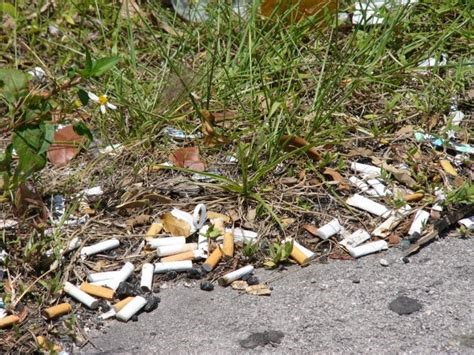
Cigarettes were part of my family’s history. My great-grandfather began a small cigarette company in England. My parents smoked. My husband smoked. I smoked. I remember the awkwardness of cigarette butts. What to do with them? Back then I didn’t know there was plastic in them, and that if dropped, birds and other marine life would eat them and get sick.
I know now. As a Zero Waste Granny, I spend hours each month as I walk along, picking up butts along with other roadside litter. I know that each butt I pick up may save it being eaten by a seabird. Last week, the rain came and stormwater flooded down the side of the road, sweeping the roadsides clean and gifting every cigarette butt and piece of plastic litter into the world of marine creatures, those very ones that make the Bay so special for each one of us.
As a smoker, a friend gave me a special gift. It was a small screw top tin that she had hand painted in my favourite colours. This little tin meant a lot to me, it made me feel valued and cared for, honoured my dignity and my choice to be a smoker, yet allowed me to value and care for the environment wherever I stood. I kept it in my bag, in my car, used it at home. Today, caring for our environment is more urgent than ever. Like my friend all those years ago, I can find ways to support others using alternatives to just the quick drop to the ground of a butt, or two. It may be public ashtrays, a painted tin, or just a caring dialogue with a smoker about how together we can care for our Bay. It’s our common future, eh? #FarNorth.Us.Flourishing.
-
LETS NOT TALK ABOUT ‘THEM’

We’ve fallen into reliance on ‘them’, government and business, but as my previous blog outlined, we householders have significant power to create real change. We seem to hang back, challenged by the loneliness of embarking on a journey such as zero waste by ourselves.
So, why not make it ‘easy as’ and a whole lot more fun by doing stuff together with others? This blog explores how getting together with others seems central to household adoption of zero wastefulness.
‘Nelson Mandela had this genuine belief – and he often argued with me about the provability of it – that human beings are essentially ‘good-doing beings, beings who do good’… He argued that, “If you follow human beings from the moment they get up in the morning until they retire at night, you would find that most of them do the proper things most of the time, and that erring is an aberration” ‘[1]
I guess you recognise, as I do, Mandela’s viewpoint in your own understanding, perhaps partially buried under layers of social conditioning to the contrary. It’s not surprising, given that recent research finds humankind the most empathetic and altruistic of all living species; we have evolved to naturally form small groups to work together for the common good.
It was clear in the interviews last year as part of my Masters research that shifting to zero waste lifestyles improved physical, mental and spiritual well-being. Localising food production and introducing sharing schemes also led to a greater sense of community. It got me thinking , ‘Could we join together with others whose company we value, our friends, our neighbours, or our colleagues, to make the journey to zero wastefulness a fun way to flourish both individually and as communities?
For me, the journey to zero wastefulness has given me a core sense of my unique purpose which was reason enough for me to change my habits. I believe Mandela is right, we’re caring beings, but of course we each prioritise our caring into different areas and I’m aware that not everyone finds reducing waste an enjoyable and challenging adventure! Reflecting on our district, there’s certainly no ‘one size fits all’ when it comes to waste reduction.
Drifting, anchoring, voyaging or treasuring?
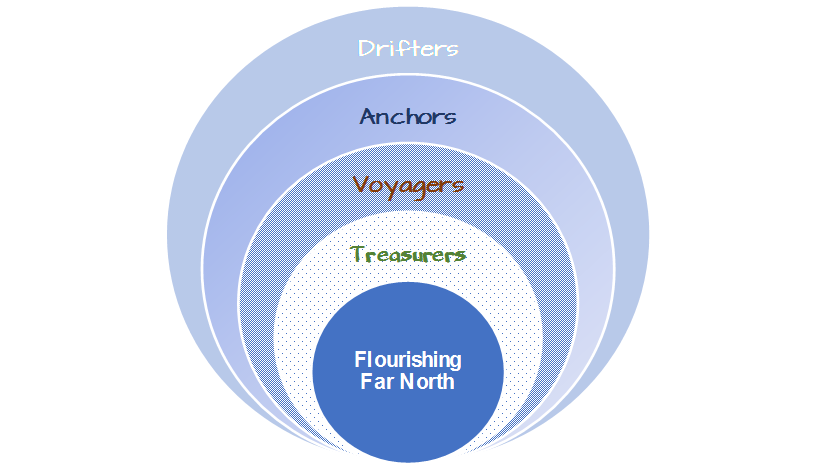 Figure 1. Four levels of householder behaviour towards waste
Just as the varied species create the beauty of our New Zealand bush, so too, much of the charm of the Far North District comes from the diversity of our householders. With so many unique individuals, it’s hardly surprising we have such varying attitudes towards zero waste goals. The model in Fig. 1 above describes 4 types of householder behaviour I notice here in the Far North. Of course, responses to waste shift between levels depending on circumstances, my own included, but perhaps you recognise yourself or others in the descriptions below?
A Drifter meets their own strong need to belong by following market trends, doing whatever they believe their peers see as ‘on trend’. Drifters shift like flotsam and jetsam flowing in and out with the tide. Not everyone has the resources to deal with change, and Anchors stick with the way they’ve ‘always done things’. Blocking out alternative options, even ways to minimise waste that might now better meet their needs, may be easier than opening up and grieving alone over awful environmental issues. Voyagers, on the other hand, need to connect with values they view as important, and so adventurously set out on a journey to reduce their own wastefulness amidst a sea of Drifters and Anchors. It’s a lonely journey though, in a culture averse to conflict, but eased when they catch sight of Treasurers, beacons of light who can inspire and guide their journey. These Treasurers are the rare people at any age who choose to treasure what they have. These inspirational people find greater meaning in what they do and their connections with their brothers and sisters of all living species than in what they can purchase.
So, with all these different types, how will the message of zero wastefulness ever infiltrate the wider Far North community? Anchors and drifters seem to hold back a flourishing Far North, don’t they? Well, I think not, they just need to get together with like-minded others, and here’s one way it could happen.
Spreading Positive Change – the Big Organising Model.
‘Big organising’, a new model for spreading positive change was used in the 2016 Bernie Sanders US election campaign. With little money but such a transformational vision for change that it inspired people across party lines, in just 7 months, Sanders shifted from just 3% name recognition at the start to gaining 46% of the votes. It is believed one further month would have tipped Clinton out of the nomination and the Trump campaign would have been defeated. Such are the hindsights of history, but the important thing is how the campaign used volunteers to connect directly with 75 million Americans.
At public meetings, volunteers were asked to sign up to host a ‘house party’ inviting others around to their home to work together to spread the word. After signing up, house party hosts came to the stage to tell others what would be unique and fun about their own house party. It was a model that worked, with the confidence of others creating similar groups, with guidelines, support and by sharing ideas, they were able to decide for themselves how best to spread understanding of the Sanders vision. The Big Organising model has now been used around the globe. Local leadership is not appointed, but arises out from the work the volunteers do, other people join in and the first wave of volunteers hands the baton on to others.
Would a public meeting with an invited panel of ‘Treasurers’ discussing a waste issue relevant to the community similarly inspire offers to be house party hosts? I believe so, polls show that the majority of the NZ public is highly concerned about waste. My expectation is that some people will be moved by relevant speakers to want to gather a few friends, neighbours, or colleagues together and give some aspect of waste reduction a go. Hosts could be provided with guidelines, followed up with support from peer-to-peer text messaging, and results can fed back to monitor the movement. The Big Organising model avoids a common problem of campaigns, burn-out of volunteers; hosts can ‘hand on the baton’ to one or more of those attending to hold a further ‘house party’ with their own friends and so forth.
Zero waste priorities and constraints, as already mentioned, are very different for different people. However, as you will see from the following scenarios, appropriate house party gatherings could provide the peer support to engage not only Voyagers, but Anchors and Drifters too:
- a farmer inviting other farmers for a ‘zero waste bbq’ to discuss how they can reduce toxic plastic waste
- a teenager gathering a group of friends to talk together about what would work for them to transform their school
- a lunchroom get-together of colleagues to talk about what their organisation can do
- mothers with young babies bringing to the coffee table the plastic concern that bugs them most and discussing ways to get around it
- a couple of senior citizens hosting a machinery repair or clothing alteration session for young neighbours.
So, why wait for ‘them’, be they government, council or business sector before change towards zero wastefulness and 100 % vitality happens? Remember ‘Sihamba nabahambayo’ (‘We take along with us those who are ready for the journey‘)? What if every Far North householder is ready? It’s just that like any journey, it’s a whole lot more fun with like-minded companions.
[1] Dare not Linger: the Presidential Years. Nelson Mandela & Mandla Langa (2017).p. 118-119 .https://us.macmillan.com/books/9780374134716

About Me
The sky is not completely dark at night. Were the sky absolutely dark, one would not be able to see the silhouette of an object against the sky.
Follow Me On
Subscribe To My Newsletter
Subscribe for new travel stories and exclusive content.

